Mannanase enzyme knowledge for industrial formulators
FibraRift is an independent technical resource for Endo-1,4-β-Mannanase: the enzyme used to cut β-mannan structures into shorter, more manageable carbohydrates. For formulation scientists, feed technologists, process engineers, and sourcing teams, the value is direct: lower viscosity, cleaner flow, improved substrate access, and more predictable performance in mannan-rich systems.
Mannanase is not a generic fiber enzyme. It targets β-1,4-linked mannan backbones found in guar, locust bean gum, konjac, copra meal, palm kernel meal, soybean meal, coffee extract streams, and other botanical materials. When the right mannanase is matched to the process, dense gels and fiber tangles become easier to pump, mix, digest, extract, filter, or formulate.
What Endo-1,4-β-Mannanase does
Endo-1,4-β-Mannanase acts inside the mannan chain rather than only trimming chain ends. That internal cutting pattern is why the enzyme is useful when the objective is rapid viscosity reduction or controlled structural change.
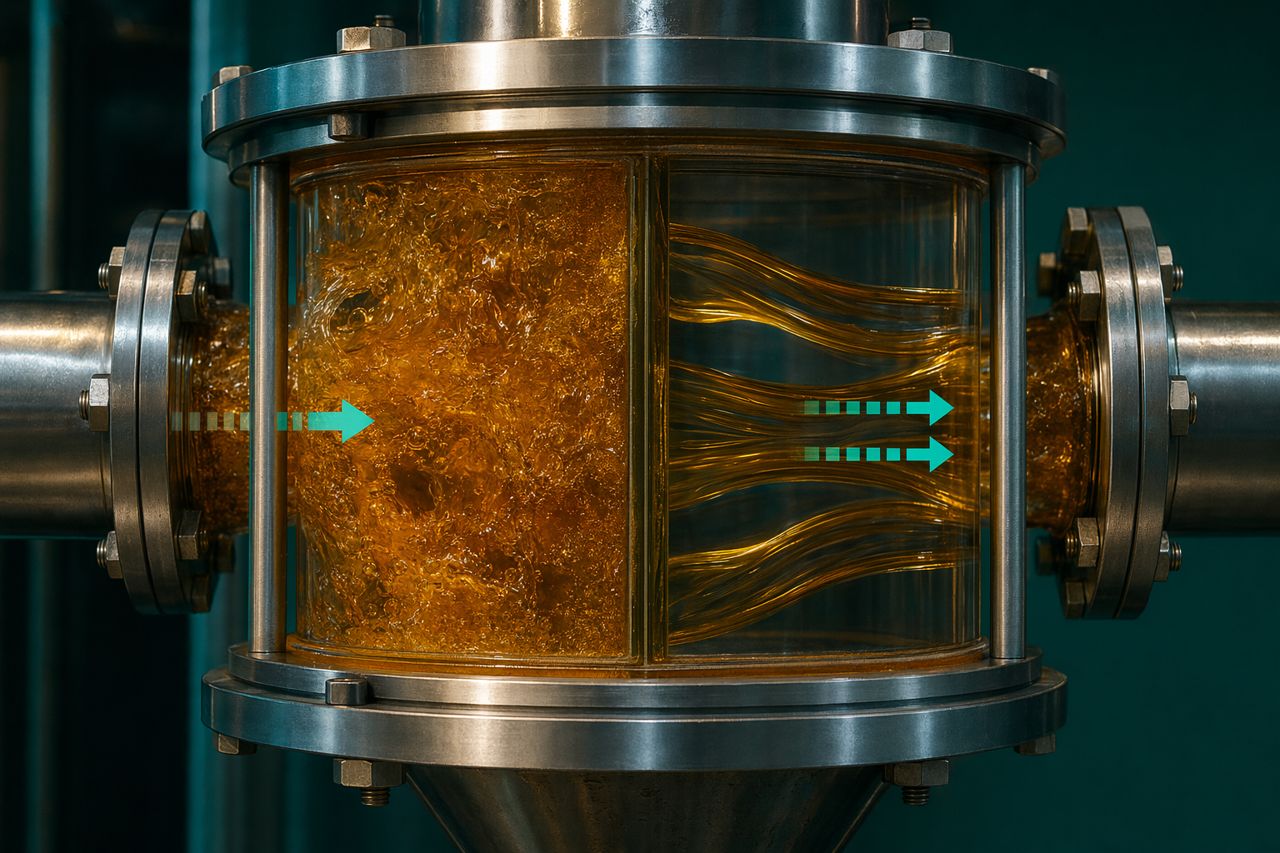
In industrial language, it helps convert a resistant, water-binding polysaccharide network into smaller soluble fragments with lower thickening power. The process benefit depends on the raw material, residence time, moisture level, temperature profile, pH environment, and the presence of other enzymes or processing aids.
Core outcomes buyers usually specify
- Viscosity reduction in guar, galactomannan, glucomannan, and mixed plant fiber systems.
- Improved mass transfer where thick, hydrated fiber limits extraction, diffusion, or mixing.
- Better flow behavior in slurries, hydrocolloid solutions, feed mash, and botanical process streams.
- Nutrient accessibility in feed substrates containing antinutritional β-mannans.
- Cleaner downstream handling through easier pumping, lower drag, and more consistent solids movement.
- Formulation control when mannan-rich materials need predictable texture or reduced gel strength.
Where mannanase creates value
Animal feed and feed ingredients
β-mannans in soybean meal, palm kernel meal, copra meal, guar meal, and related ingredients can increase digesta viscosity and interfere with nutrient utilization. A well-selected mannanase can support feed efficiency by reducing the structural effect of these non-starch polysaccharides and improving access to encapsulated nutrients.
For feed technologists, the practical questions are not abstract. They are: which raw materials carry the mannan load, how variable is the supplier base, where does heat exposure occur, and what physical form must the enzyme survive?
Typical feed formulation considerations:
- Compatibility with mash, crumble, pellet, premix, and liquid application strategies.
- Stability expectations across storage, mixing, and thermal exposure.
- Fit with xylanase, β-glucanase, protease, phytase, or multi-enzyme programs.
- Consistency across variable soybean, palm, guar, and copra-derived inputs.
Food, beverage, and botanical processing
Mannanase is used where plant hydrocolloids or mannan-rich materials create unwanted thickness, slow filtration, or inefficient extraction. In coffee, coconut, konjac, guar, and legume-related streams, the enzyme can help open fiber structures and reduce process drag.
Common processing objectives:
- Lower slurry viscosity before filtration, concentration, drying, or separation.
- Improve extractable yield from botanical solids.
- Reduce excessive gel strength in hydrocolloid-containing systems.
- Improve pumpability and heat-transfer consistency.
- Support controlled textural modification without aggressive mechanical treatment.
Industrial fiber modification
In bioprocessing, paper-adjacent fiber treatment, and specialty carbohydrate conversion, mannanase can be used as a targeted tool for modifying plant cell-wall polysaccharides. It is especially relevant when mannan is the bottleneck fiber fraction or when broad-spectrum enzyme blends create too much collateral change.
Selecting a mannanase: the decision points that matter
A buying decision should begin with the substrate and the operating constraints, not with a catalog label.
1. Substrate fit
Galactomannan, glucomannan, linear mannan, and mixed hemicellulose matrices do not behave the same way. Side-chain density, hydration rate, particle size, and pretreatment all affect response.
2. Process window
Temperature, pH, water availability, contact time, and shear determine whether the enzyme has enough access and enough time to create measurable change. The best choice is the mannanase that performs inside the real production window, not only under ideal conditions.
3. Form and handling
Powder, granulated, coated, and liquid forms each solve different handling problems. Feed mills may prioritize dust control and heat tolerance. Beverage processors may prioritize dispersion and clean dosing. Dry-blend formulators may prioritize flowability and storage behavior.
4. Blend compatibility
Mannanase is often paired with other carbohydrases. The blend must be designed around the dominant substrate barrier. More enzymes are not always better; the correct cleavage pattern and application timing matter more than a crowded ingredient statement.
5. Commercial consistency
Industrial buyers need repeatability across lots, packaging, documentation, and supply timelines. For sourcing teams, the relevant specification is the one that supports stable purchasing, clear handling, and predictable production outcomes.
What to ask before requesting pricing
Use these questions to structure a technical request:
- What raw materials contain the mannan fraction?
- Is the target viscosity reduction, yield improvement, feed performance, texture control, or filtration speed?
- Where will the enzyme be added in the process?
- What are the approximate process pH and temperature conditions?
- How long is the contact time before inactivation, drying, pelleting, or downstream separation?
- Is the final application food, feed, industrial processing, or research-scale development?
- Are there packaging, allergen, regulatory, or documentation requirements?
Clear answers help match enzyme form, stability profile, and commercial pack size to the actual job.
What FibraRift focuses on
FibraRift is built around one enzyme family and one industrial problem: controlling β-mannan behavior. The purpose is to help B2B teams define the application clearly, communicate requirements efficiently, and move from trial concept to sourcing conversation with fewer blind spots.
You can use this site to:
- Frame a mannanase requirement for internal review.
- Compare application logic across feed, food, beverage, and industrial processing.
- Prepare a concise quote request for commercial supply discussions.
- Align R&D, procurement, and plant operations around the same performance target.
Request a quote or get pricing
Tell us what you are processing and what outcome you need. Use the form below for pricing, sample discussion, technical fit, packaging, or documentation questions.
The short version
Mannanase is a precision tool for cutting β-mannan networks. Used well, it turns thick, resistant fiber systems into lower-viscosity, process-ready material. The buying decision should be tied to substrate, operating window, form, handling, and measurable industrial outcome.