A practical B2B guide to raw materials and process streams that may benefit from Endo-1,4-β-Mannanase, including feed ingredients, gums, meals, pulps, and viscous mannan-rich systems.
Request pricingMannanase is most valuable where β-mannan structures create viscosity, restrict nutrient release, complicate filtration, or limit flow through a process. For buyers and technical teams, the question is not simply whether a material is “plant-based” or “fiber-rich.” The key is whether the stream contains accessible mannan, galactomannan, glucomannan, or related β-1,4-mannan backbones that Endo-1,4-β-Mannanase can open.
Buying for a plant or for resale? We supply mannanase for mannan-rich raw materials to processors and resellers on a quote basis; send the material, quantity and destination. Request a quote.
Mannanase Enzyme Solutions supplies mannanase in bulk to the plants that process these materials and to the distributors who serve them: a precision tool for dense, viscous, mannan-bearing materials, for less drag, cleaner release and better process control.
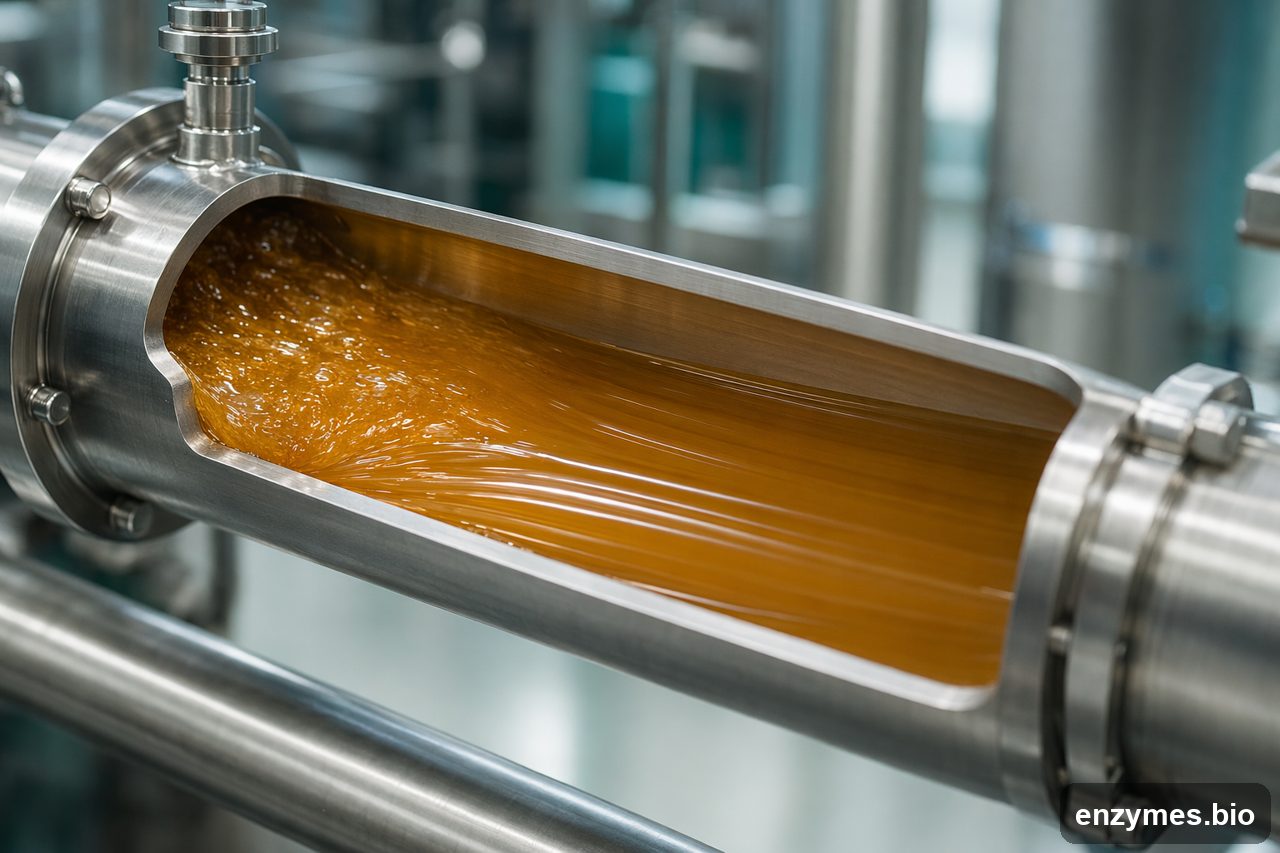
Endo-1,4-β-Mannanase hydrolyzes internal β-1,4 linkages in mannan-based polysaccharides. In industrial terms, it can help reduce the functional impact of materials that hold water, build viscosity, trap nutrients, or obstruct extraction.
Common target structures include:
Mannanase is not a universal fiber enzyme. It is selected when the limiting substrate is mannan-based, not when the challenge is mainly starch, cellulose, pectin, protein, lipid, or xylan.
Palm kernel co-products are among the most relevant mannanase substrates in animal nutrition and ingredient processing. Their cell wall fraction can be rich in mannan-type hemicellulose, which may restrict nutrient access and contribute to lower digestibility.
Potential mannanase value:
Best-fit users: feed formulators, premix producers, integrators, and ingredient processors working with palm kernel meal or cake.
Copra meal and related coconut solids often contain significant mannan-based fiber. These materials can be useful protein and energy contributors, but their fibrous architecture may limit digestibility and handling performance.
Mannanase may support:
Copra-based materials are strong candidates for screening because the substrate is structurally aligned with mannanase specificity.
Guar is built around galactomannan. In industrial systems, even low levels can strongly influence viscosity, hydration behavior, and flow resistance.
Mannanase may be relevant for:
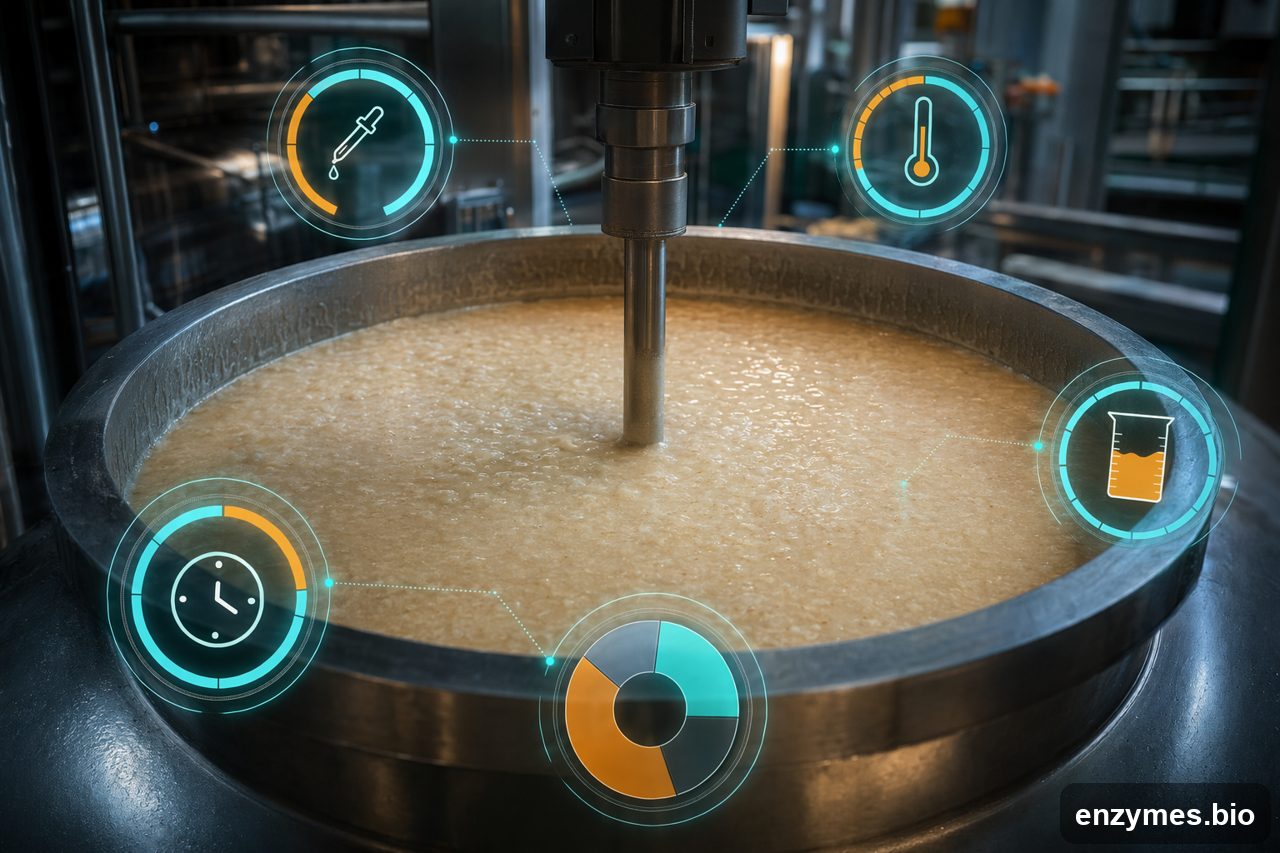
For guar gum, the desired outcome matters: full viscosity collapse, partial thinning, or controlled texture adjustment are very different technical briefs.
Seed gums based on galactomannan chemistry are clear mannanase candidates. These materials are used for thickening, stabilization, and water-binding, which means enzymatic modification must be deliberate and controlled.
Potential use cases include:
These substrates require careful evaluation because the same structure that creates processing difficulty may also be part of the intended product function.
Konjac and related glucomannan sources can create dense hydration and gel-like behavior. Mannanase may be selected where the goal is to loosen structure, reduce viscosity, or improve processing of glucomannan-rich streams.
Possible benefits:
Konjac systems should be tested against actual process conditions because hydration state and thermal history strongly influence enzyme access.
Soybean meal is not the most concentrated mannan substrate, but it can contain mannan-type non-starch polysaccharides that influence digestibility and gut viscosity, particularly in complex feed systems.
Mannanase may be considered when:
In mixed diets, response depends on total accessible mannan load, ingredient blend, processing conditions, and animal segment.
Coffee materials can contain galactomannan-rich polysaccharides. In extraction and downstream processing, these fractions may affect viscosity, soluble solids behavior, and clarification.

Mannanase may help with:
Fit should be assessed against flavor, aroma, solids recovery, and downstream specifications.
Certain wood and plant fiber systems contain mannans and glucomannans as part of the hemicellulose fraction. Mannanase can be relevant when the process aim is targeted hemicellulose modification rather than broad cellulose attack.
Potential technical objectives:
The best candidates are streams where mannan exposure is sufficient and where process chemistry is compatible with enzyme function.
Mannanase should not be selected by guesswork. These streams are usually weak candidates unless a mannan-bearing additive or co-product is present:
If the viscosity source is not mannan-based, another enzyme class or a blended system may be more appropriate.
A practical evaluation starts with the material, not the catalog label.
Confirm whether the raw material contains galactomannan, glucomannan, linear mannan, or mannan-rich hemicellulose. Supplier specifications, compositional literature, and internal carbohydrate profiling can all support this step.
Mannanase can be used for different reasons. Be specific:
A clear target prevents over-treatment and makes supplier comparison more useful.
The same substrate can behave differently depending on pH, temperature, water activity, solids level, retention time, mixing intensity, and pre-treatment. Screening should reflect the actual process envelope rather than idealized lab conditions.
Useful metrics may include viscosity curve, flow rate, filtration time, soluble solids behavior, nutrient release indicators, animal performance data, or downstream yield. The right metric depends on the application.
For hydrocolloid and food-adjacent systems, excessive degradation can damage intended texture or stability. For feed and biomass systems, insufficient degradation may leave value locked in the fiber. The operating window should be defined before scale-up.
| Substrate or stream | Mannan structure likely involved | Main industrial reason to evaluate mannanase |
|---|---|---|
| Palm kernel meal / cake | High mannan-type hemicellulose | Nutrient release, feed value, fiber disruption |
| Copra meal | High mannan-rich fiber | Digestibility support, co-product utilization |
| Guar gum | Galactomannan | Viscosity reduction, controlled gum modification |
| Guar meal | Galactomannan-rich residue | Feed performance, fiber reduction |
| Locust bean gum | Galactomannan | Process thinning, texture control |
| Tara / cassia gum | Galactomannan | Viscosity and flow management |
| Konjac | Glucomannan | Gel structure reduction, process flow |
| Soybean meal | Moderate mannan-type NSP | Mixed-feed nutrient access |
| Coffee extract / spent coffee | Galactomannan fractions | Viscosity control, filtration support |
| Selected pulp and fiber streams | Mannan / glucomannan hemicellulose | Fiber modification, dewatering, separation |
When comparing mannanase suppliers, request evidence in your substrate class, not only broad enzyme claims. A credible supplier should be able to discuss:
Avoid one-size-fits-all positioning. Mannanase performance is substrate-dependent and process-dependent.
Many industrial streams contain mixed polysaccharides. Mannanase may be the lead activity when mannan is the limiting structure, but a supporting enzyme system can be more effective when the matrix also contains significant xylan, cellulose, pectin, starch, or protein barriers.
Examples:
The decision should be based on the dominant bottleneck: viscosity, nutrient encapsulation, filtration resistance, or structural release.
Mannanase Enzyme Solutions treats mannanase selection as a substrate-mapping problem. We look for dense mannan architecture, process-limiting viscosity, and measurable release opportunities. The goal is not simply to add enzyme. The goal is to cut the right polymer network at the right point in the process.
Use mannanase when the material’s fiber structure is holding value in place.
We supply mannanase for mannan-rich raw materials in bulk to manufacturers, distributors and resellers, on a quote-only basis. To get a grade recommendation and a price, send the product or application, the quantity (trial lot, monthly or annual volume), the destination country, and the process step where the enzyme will be added. Form and pack size are quoted per order, and we tell you which documents are available for that grade.


Precision mannan breakdown for smoother industrial flow.
Tell us your application and volume — we reply with pricing and lead time.
We have received your message. We will reply by email.